Large Format Laser Marking for Elevator Panels: How to Process Decorative Stainless Steel Patterns
Elevator manufacturers and architectural metal fabricators often need to mark decorative patterns on large stainless steel panels. The challenge is not simply producing a clear pattern. It is maintaining consistent marking quality across a large surface while controlling processing time, pattern alignment, and visible transitions between marking areas.
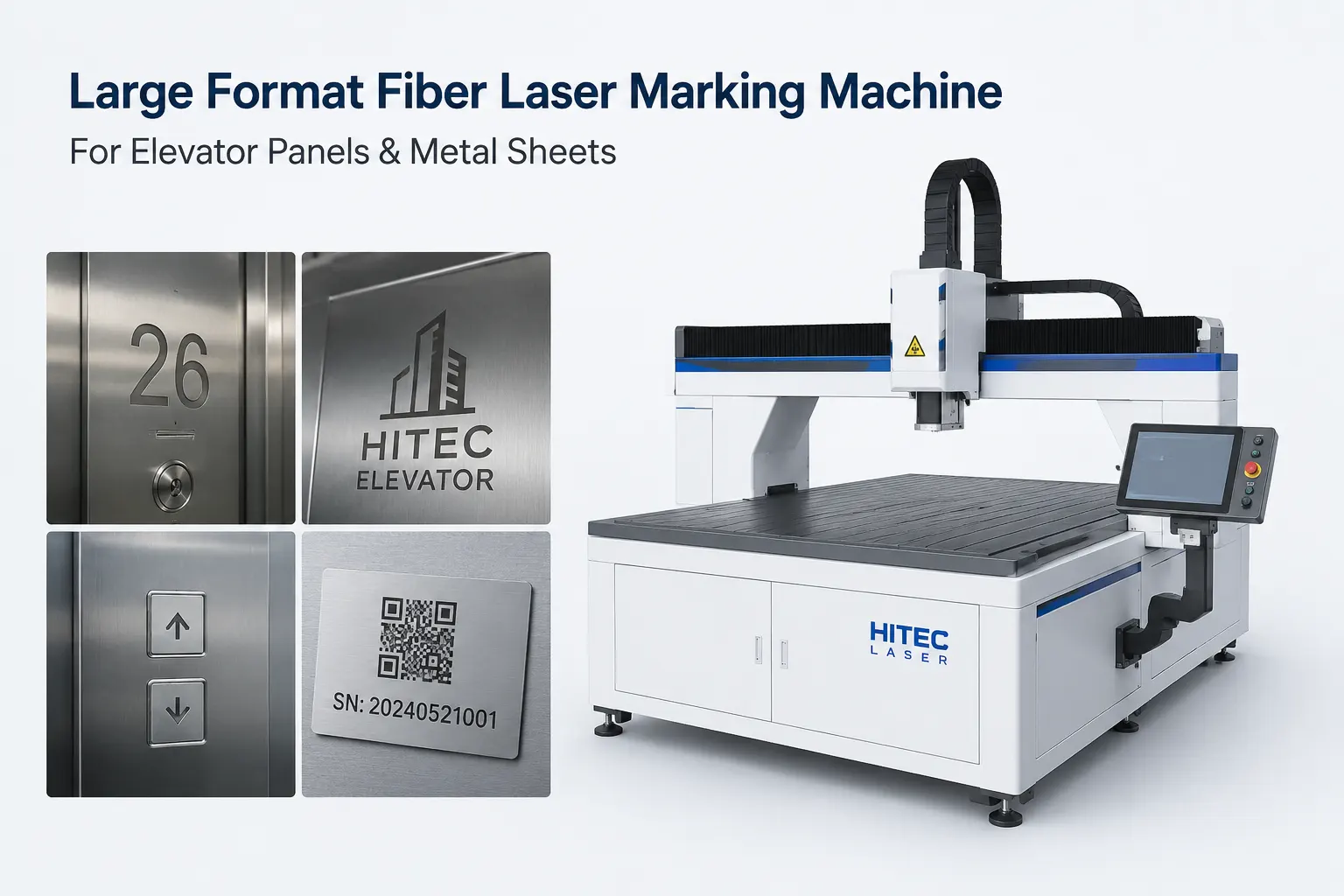
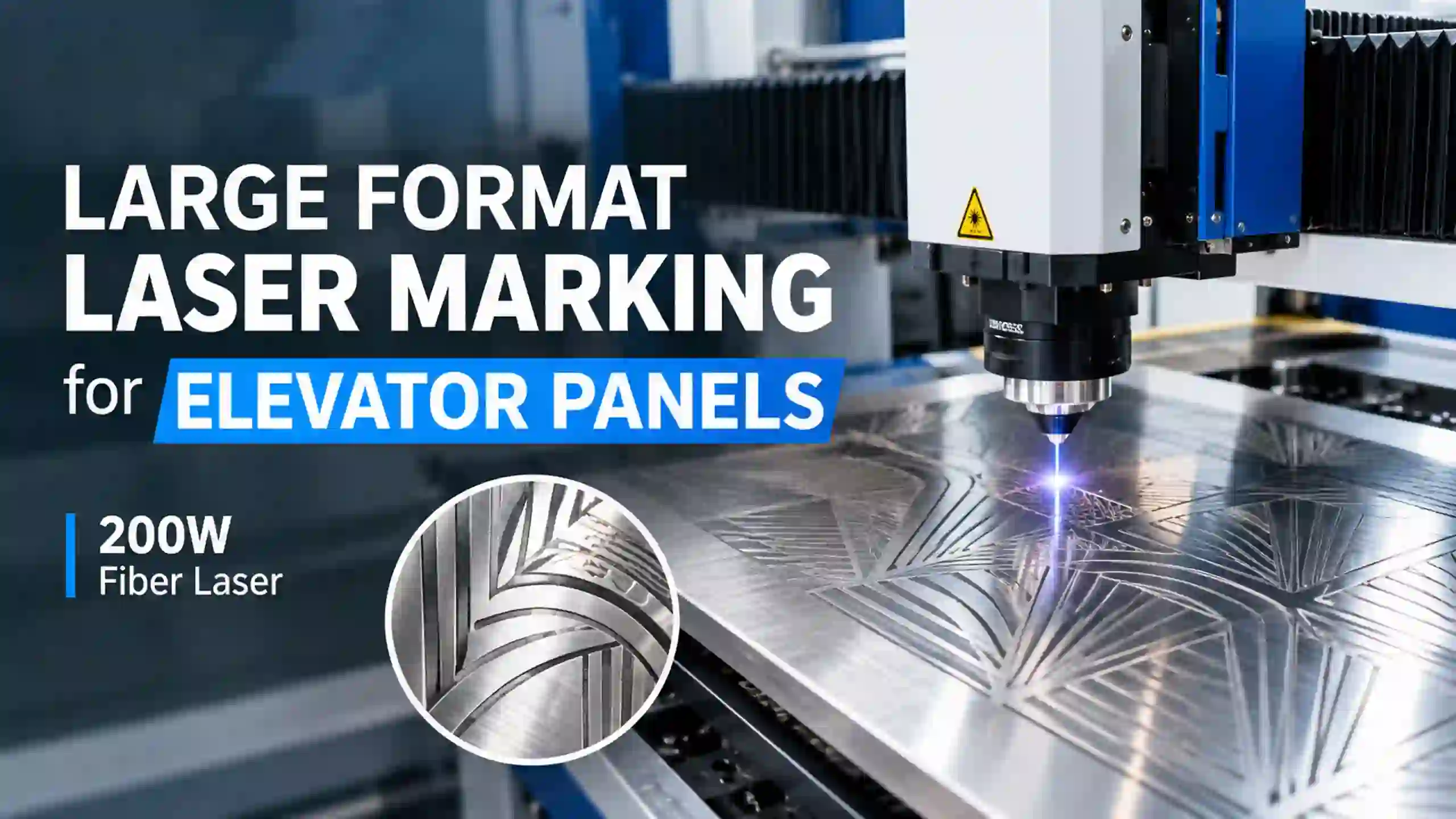
A large format fiber laser marking machine provides a flexible solution for processing decorative elevator panels, stainless steel sheets, and other architectural metal components. With a properly configured motion system and laser source, manufacturers can produce detailed patterns across larger workpieces without relying on manual repositioning for every marking section.
This guide explains how large format laser marking works for elevator panels, what to consider when selecting a machine, and how a 200W fiber laser system can support decorative metal processing.
1. What Is Large Format Laser Marking for Elevator Panels?
Large format laser marking uses a laser system with an extended working area or a coordinated motion system to process patterns across larger workpieces.
In elevator manufacturing, typical applications include:
Decorative patterns on stainless steel elevator door panels
Geometric patterns for elevator cabin interiors
Branding, logos, and identification marks on metal panels
Surface designs for architectural metal components
Customized decorative patterns for commercial buildings and hotels
Unlike conventional marking applications involving small nameplates or individual components, elevator panel processing often requires the pattern to remain visually consistent across a much larger surface.
The appropriate machine configuration depends on panel dimensions, material, pattern complexity, desired surface appearance, and production volume.
2. Can a 200W Fiber Laser Mark Decorative Elevator Panels?
Yes. A 200W fiber laser marking system can be suitable for decorative marking on compatible metal surfaces, including stainless steel, depending on the required finish and processing parameters.
However, laser power alone does not determine the final result. The laser source, scanning system, motion configuration, marking strategy, material finish, and processing speed all affect the outcome.
A 200W system may be considered for applications such as:
Decorative patterns on stainless steel panels
Large-area surface marking
Customized geometric designs
Metal identification graphics and logos
Repeated patterns for architectural applications
Important: Decorative marking is not the same as deep engraving. The required power and processing strategy depend on whether the application calls for surface discoloration, a textured appearance, material removal, or another specific finish.
Before selecting a machine, manufacturers should test representative samples using their actual material and target pattern.
3. How Does a Large Format Laser Marking Machine Process Large Panels?
There are different ways to achieve a large working area. Understanding the distinction is important when evaluating equipment.
Galvo laser marking
A galvanometer scanning system directs the laser beam across its optical marking field. It is widely used for fast, detailed marking within the available field.
A conventional galvo system is limited by its configured optical field. Marking a panel larger than that field may require repositioning, multiple processing sections, or a suitable dynamic optical solution.
Gantry-assisted laser marking
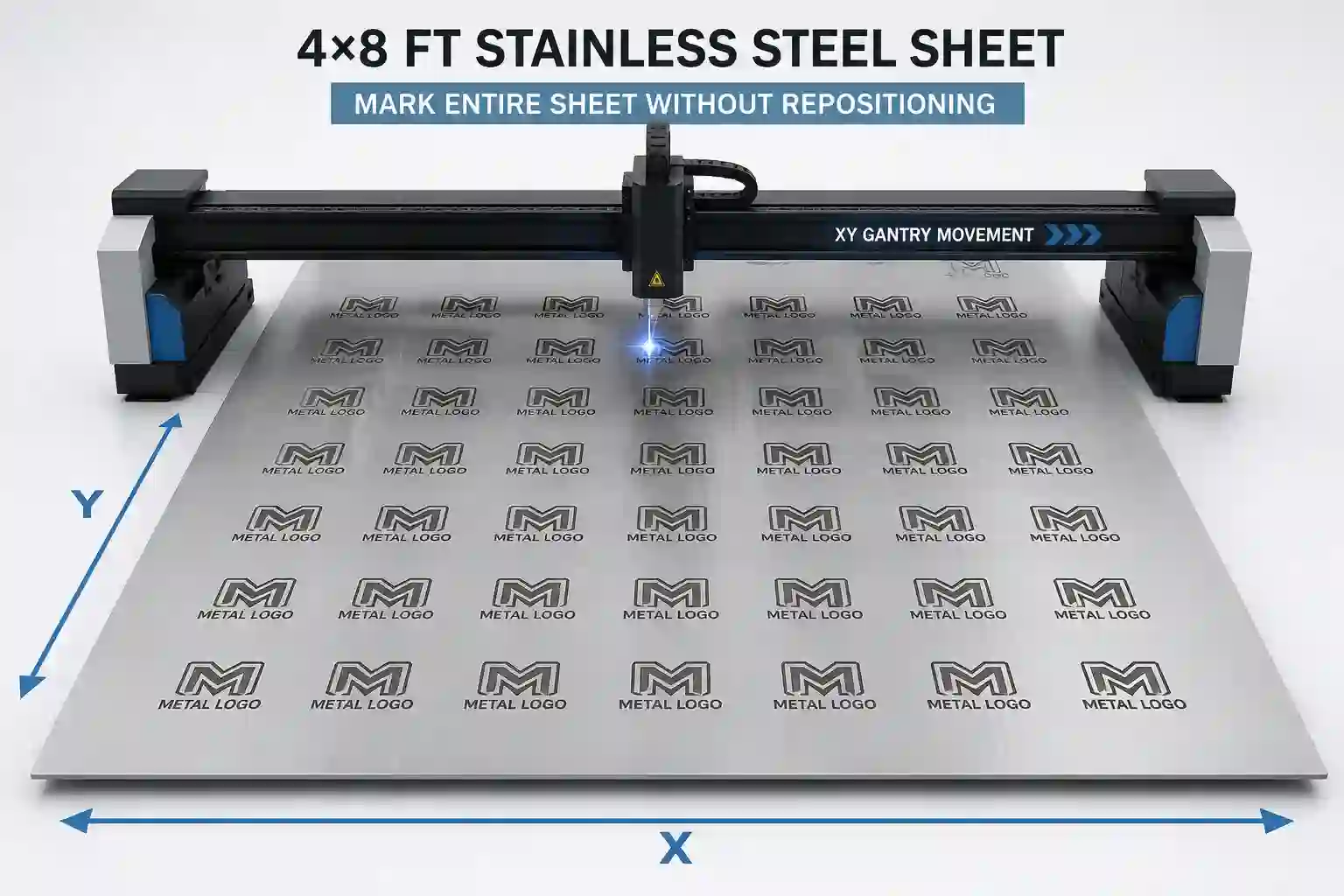
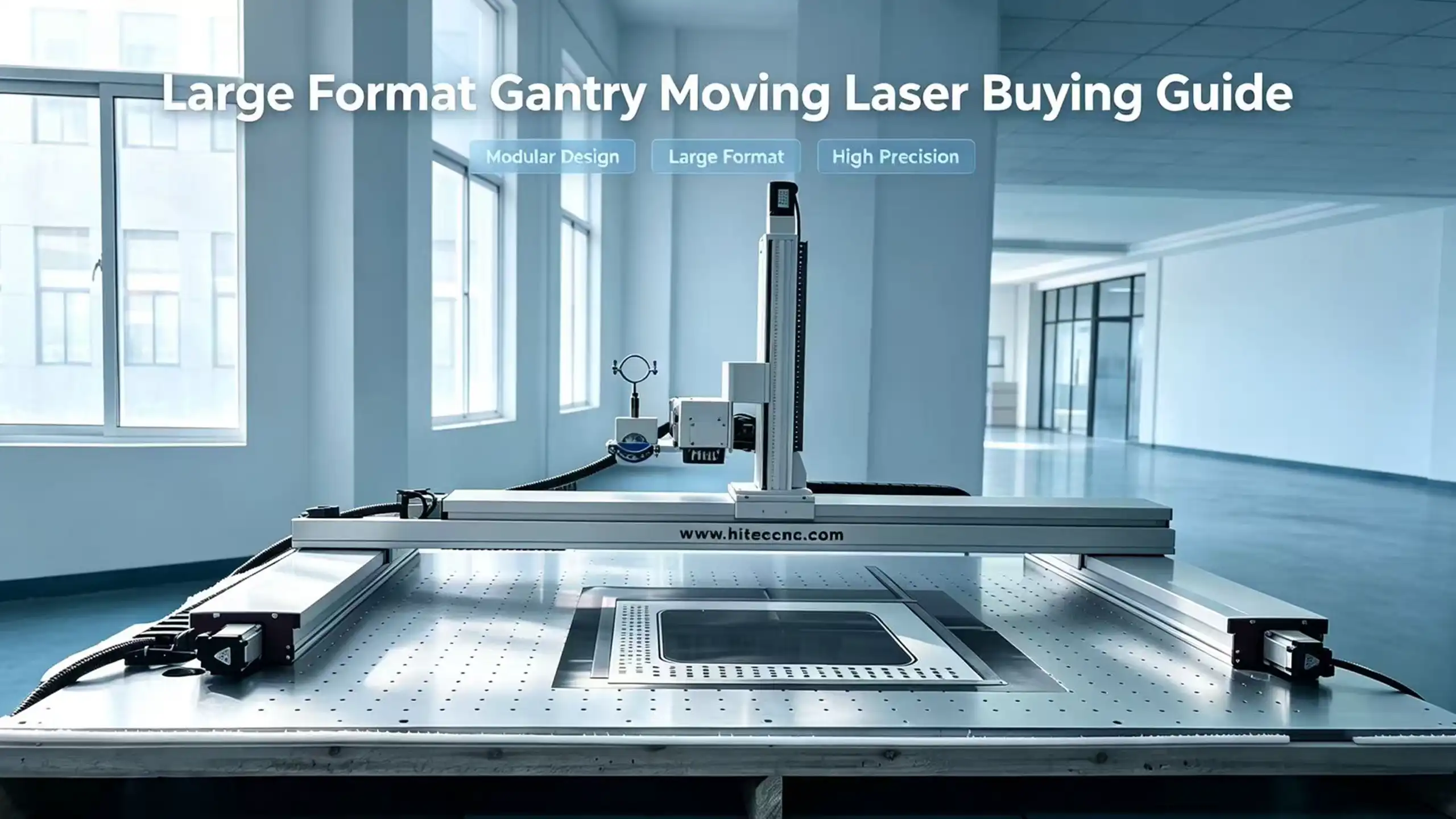
A gantry-assisted system moves the marking head or optical assembly across a larger working area. Depending on its design, it can process different sections of a large panel while coordinating the laser marking operation with mechanical movement.
This configuration can be useful for elevator panels, large metal sheets, and other applications where the required processing area exceeds a conventional galvo field.
Dynamic large-area marking
Dynamic optical systems can extend the usable marking area in suitable configurations. Their actual performance depends on the optical system, motion arrangement, calibration, and software.
A larger advertised working area does not automatically mean that the entire surface can be marked in one optical field or with no stitching. Buyers should confirm the machine’s actual working area, movement method, and processing strategy.
4. How Can Manufacturers Reduce Visible Stitching Lines?
One of the most important considerations in large format laser marking is the transition between adjacent processing sections.
Visible transitions may result from several factors:
Inconsistent laser energy between adjacent areas
Incorrect overlap or marking-field calibration
Misalignment between mechanical movement and optical scanning
Differences in material surface finish
Variations in laser parameters or pattern compensation
To reduce these issues, manufacturers should evaluate the following:
Accurate field calibration: The optical marking field and mechanical movement must be calibrated for the intended working area.
Consistent laser parameters: Power, speed, frequency, and other relevant settings should be optimized for the material and pattern.
Appropriate marking strategy: The software and motion configuration should account for the pattern geometry and the transitions between processing areas.
Full-size sample testing: A test on a small coupon may not reveal every alignment or transition issue. Testing a representative large panel provides a more reliable assessment.
No single configuration guarantees a completely seamless result in every application. The practical objective is to minimize visible transitions and maintain consistent pattern quality under defined production conditions.
5. What Should You Check Before Buying an Elevator Panel Laser Marking Machine?
When comparing large format laser marking machines, focus on application requirements rather than laser wattage alone.
| Selection factor | What to verify |
|---|---|
| Working area | Confirm the actual usable X-Y processing dimensions |
| Laser source | Select a suitable source and power for the target material and finish |
| Motion system | Understand whether the machine uses galvo scanning, gantry movement, dynamic optics, or a combination |
| Pattern quality | Evaluate line definition, surface consistency, and transitions across the panel |
| Positioning accuracy | Request defined accuracy and repeatability specifications |
| Software | Confirm support for the required artwork, pattern layout, and large-area processing workflow |
| Sample testing | Test the customer’s actual material and representative design |
| Production speed | Measure the time required for the complete pattern, not just the laser’s nominal marking speed |
6. Large Format Laser Marking Applications Beyond Elevator Panels
The same large-area processing principles can apply to other industrial and architectural applications, including:
Stainless steel decorative sheets
Architectural metal panels
Large metal logos and signage
Elevator cabin decorative components
Metal nameplates and identification panels
Customized patterns for interior design
The suitable machine configuration varies according to the material, required finish, workpiece dimensions, and production workflow.
For applications involving coated metals, reflective surfaces, or specialized finishes, sample testing is particularly important because the coating and substrate may respond differently to laser processing.
7. Why Consider HITEC Laser for Large Format Laser Marking?
HITEC Laser focuses on industrial laser marking solutions for applications that require larger working areas and application-specific configurations.
When evaluating a large format laser marking solution for elevator panels, customers should discuss:
Application-based configuration: Matching the laser source and motion system to the panel size and desired surface finish.
Customized working areas: Selecting a suitable machine configuration for the actual workpiece dimensions.
Sample verification: Testing decorative patterns on the customer’s material before finalizing the technical solution.
Technical guidance: Reviewing processing methods, calibration requirements, and workflow considerations for large-area marking.
The objective is to select a machine that meets the real production requirements, rather than choosing a configuration based on wattage or nominal marking area alone.
Frequently Asked Questions
Can a fiber laser mark patterns on stainless steel elevator doors?
Yes. A suitable fiber laser system can mark decorative patterns on compatible stainless steel surfaces. The final appearance depends on the stainless steel grade, surface finish, laser parameters, and pattern design.
Is 200W enough for large format elevator panel marking?
A 200W fiber laser may be suitable for many decorative metal marking applications. The correct choice depends on the required finish, pattern density, panel dimensions, and target processing time. Sample testing is recommended.
Can a large format laser marking machine process a full elevator panel without repositioning?
That depends on the machine’s actual working area and motion configuration. If the panel exceeds the available optical field or usable travel, the machine may need coordinated movement or multiple processing sections.
Is laser marking the same as deep engraving?
No. Laser marking changes the surface appearance, while engraving generally involves removing material to create a recess. Some laser systems can perform both processes under suitable conditions, but the required configuration and parameters differ.
What information is needed for a large format laser marking quotation?
Provide the panel dimensions, material and surface finish, a representative pattern file, the required visual result, expected production volume, and target processing time. These details help determine the appropriate laser source, working area, and motion system.
Conclusion
Large format laser marking can help elevator manufacturers and architectural metal fabricators produce customized decorative patterns on stainless steel panels. Successful processing depends on more than laser power: the working area, motion configuration, calibration, material characteristics, and marking strategy all matter.
For a 200W large format fiber laser marking solution, the most reliable approach is to evaluate the complete application and test a representative panel before confirming the machine configuration.
Need a large format laser marking solution for elevator panels? Contact HITEC Laser with your panel dimensions, material, and pattern requirements to discuss a suitable configuration and sample test.