Laser Sandblasting, Engraving, Coating Removal & Drilling for Mirrors
HITEC Laser Mirror Laser Sandblasting Machine is an industrial laser processing system designed for mirror frosting, sandblasting-style engraving, coating removal, back paint removal, transparent pattern creation, and glass drilling.
It is developed for manufacturers of LED mirrors, smart mirrors, bathroom mirrors, decorative mirrors, furniture mirrors, and customized glass products that need precise, repeatable, and digitally controlled mirror processing.
Instead of using traditional abrasive sandblasting, chemical etching, or physical masking, laser technology processes the required area directly from a digital design.
One laser machine for multiple mirror-processing applications.
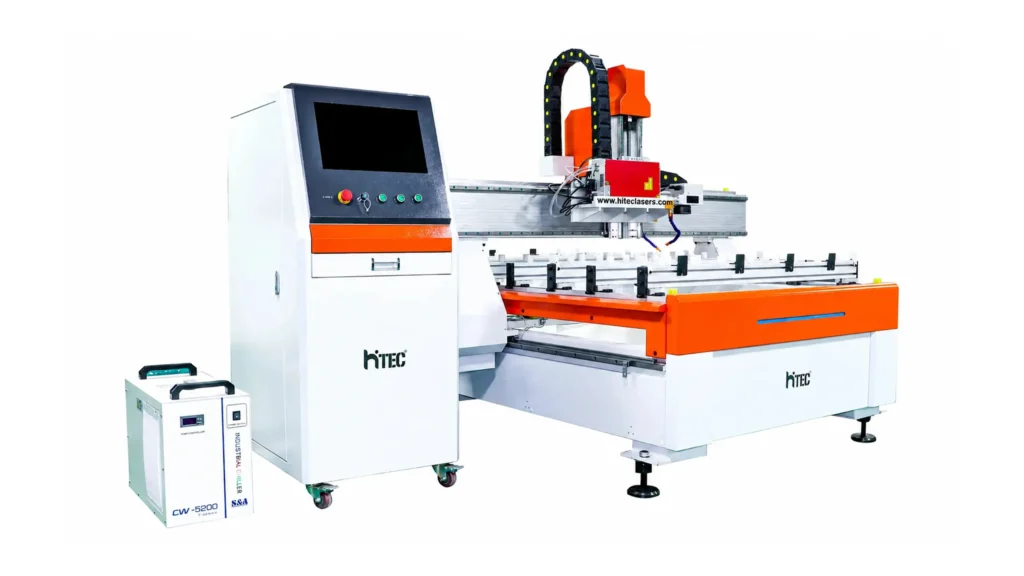
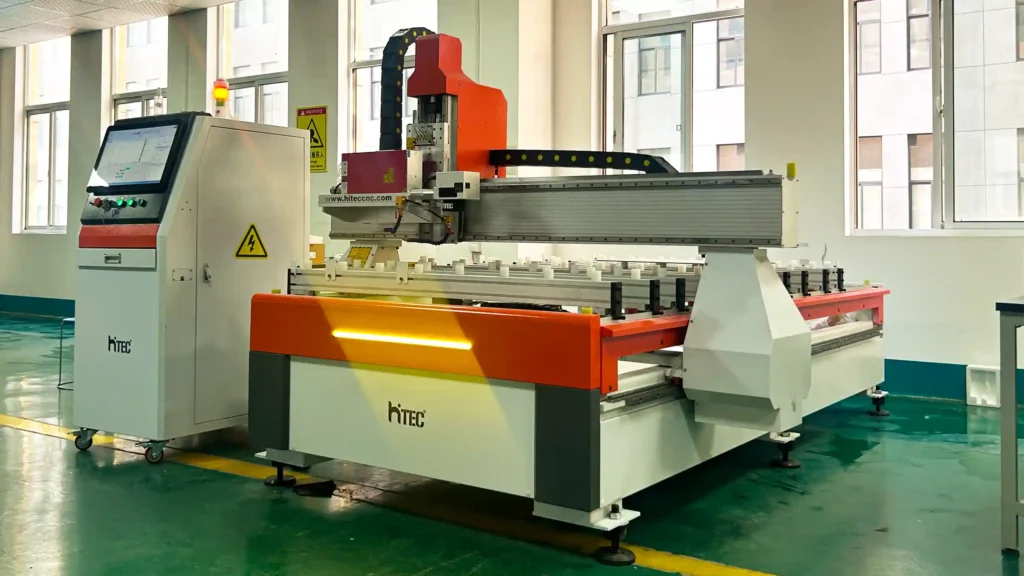
What Is a Mirror Laser Sandblasting Machine?
A mirror laser sandblasting machine is a specialized laser system used to create frosted, matte, engraved, or light-transmitting effects on mirror glass.
The term “laser sandblasting” describes the visual and functional result rather than conventional abrasive blasting. A controlled laser beam selectively processes the mirror surface or coating to create the required pattern.
Depending on the machine configuration and material, the same system can support:
• Laser sandblasting / frosting
• Mirror engraving
• Pattern etching
• Mirror coating removal
• Back paint removal
• Transparent window creation
• LED light-transmission areas
• Smart mirror touch areas
• Glass and mirror drilling
This makes laser processing particularly suitable for manufacturers producing customized mirror products with frequently changing designs.
What Can a Mirror Laser Sandblasting Machine Do?
1. Mirror Laser Sandblasting & Frosting
Create a consistent frosted or matte effect on suitable mirror and glass surfaces.
Laser-controlled processing allows manufacturers to produce:
• Frosted patterns
• Decorative borders
• Geometric designs
• Logos
• Icons
• Text
• Light-diffusing areas
• Customized artwork
Unlike conventional sandblasting, the design can be changed digitally without preparing a new physical stencil.
2. Mirror Laser Engraving
Laser engraving can create detailed patterns, logos, graphics, and decorative elements on suitable mirror glass.
Typical applications include:
• Decorative bathroom mirrors
• Hotel mirrors
• Vanity mirrors
• Furniture mirrors
• Interior decoration
• Retail displays
• Customized mirror artwork
The same digital workflow can be used for different designs, making laser engraving particularly useful for customized production.
3. Mirror Coating & Back Paint Removal
Laser coating removal selectively removes the rear coating or paint layer from a mirror to expose the glass beneath.
This process can create:
• Transparent areas
• LED light windows
• Backlit logos
• Touch-control areas
• Sensor windows
• Display areas
• Functional symbols
This is one of the key processes used in LED mirror and smart mirror manufacturing.
4. LED Mirror Laser Processing
LED mirrors require precisely defined areas where light needs to pass through the mirror.
Laser processing can create:
• Backlit borders
• Illuminated logos
• Touch buttons
• Display windows
• Sensor areas
Decorative light-transmission patterns
Because the design is controlled digitally, manufacturers can produce different LED mirror designs without changing physical masks.
5. Smart Mirror Laser Processing
Smart mirrors often combine reflective glass with electronic components.
Laser processing can create dedicated areas for:
• Touch controls
• Digital displays
• Sensors
• Cameras
• Logos
• Icons
• Backlighting
The laser selectively processes the required area while maintaining the surrounding mirror finish.
6. Mirror & Glass Laser Drilling
With the appropriate laser configuration, HITEC systems can also process holes and openings in suitable glass and mirror materials.
Typical applications include:
• Mounting holes
• Sensor holes
• Cable openings
• LED mirror components
• Bathroom mirror installation
• Electronic component openings
Drilling performance depends on the glass type, thickness, coating structure, hole diameter, and required production quality. Sample testing is recommended before final machine selection.
Mirror Laser Sandblasting vs. Traditional Sandblasting
Traditional mirror sandblasting normally relies on abrasive media and physical masking.
Laser sandblasting uses digitally controlled laser energy to create the required effect.
Feature | Laser Sandblasting | Traditional Sandblasting |
Design control | Digital file | Physical mask |
Design changes | Immediate | New mask required |
Masking | Usually not required | Normally required |
Abrasive media | Not required | Required |
Chemical etching | Not required | May be used |
Dust from abrasive media | Greatly reduced | Significant |
Small-batch customization | Excellent | Less flexible |
Complex patterns | Excellent | More difficult |
Automation | High | More manual |
Repeatability | High | Process-dependent |
The correct process still depends on the mirror construction, coating, glass type, thickness, required finish, and production volume.
Mirror Laser Processing Applications
LED Bathroom Mirrors
Create frosted borders, illuminated patterns, logos, touch areas, and light-transmitting windows.
Smart Mirrors
Process transparent areas for displays, sensors, touch controls, cameras, and backlighting.
Decorative Mirrors
Produce customized patterns, artwork, logos, borders, and decorative elements.
Hotel & Commercial Mirrors
Create branded designs, decorative patterns, and functional areas for hospitality and commercial interiors.
Furniture Mirrors
Process customized mirror panels for cabinets, furniture, vanity units, and interior decoration.
Architectural Glass & Mirrors
Process large-format decorative designs, patterns, and functional areas on suitable glass and mirror products.
How Does Mirror Laser Sandblasting Work?
Step 1 — Prepare the Design
Import the mirror pattern, logo, artwork, or production drawing into the laser software.
Step 2 — Position the Mirror
Place the mirror on the machine table and establish the required processing position.
Step 3 — Set the Processing Parameters
Laser power, speed, frequency, focus, and other parameters are adjusted according to the mirror material and desired result.
Step 4 — Laser Processing
The laser selectively processes the required surface or coating area.
Depending on the application, this may create:
• Frosted patterns
• Engraved graphics
• Transparent areas
• Light-transmission windows
• Coating-removal areas
• Holes
Step 5 — Quality Inspection
Inspect the finished mirror for:
• Pattern clarity
• Frosting uniformity
• Coating-removal quality
• Transparency
• Hole quality
• Position accuracy
• Overall appearance
Because mirror coatings and glass compositions vary between manufacturers, sample testing is strongly recommended before production.
Mirror Laser Sandblasting Machine Buying Guide
Before purchasing a machine, define these six requirements.
1. What type of mirror do you process?
Standard mirror glass
LED mirror glass
Smart mirror glass
Decorative mirror glass
Coated glass
2. What is the glass thickness?
Glass thickness can influence the laser process, especially for drilling and deeper processing.
3. What coating does the mirror use?
The reflective and protective coating structure directly affects coating-removal performance.
4. What is your largest mirror size?
The maximum mirror size determines the appropriate working area.
5. Which processes do you need?
Choose whether you require:
- Sandblasting / frosting
- Engraving
- Coating removal
- Paint removal
- Drilling
- Multiple processes
6. What is your production volume?
A machine for customized mirror orders may have different requirements from a high-volume LED mirror factory.
Send HITEC Laser your mirror sample and required design. We can evaluate the application before recommending the machine configuration.
Why Choose HITEC Laser?
Application-Based Configuration
We select the laser configuration based on your mirror, coating, glass thickness, working area, and required result
Large-Format Capability
HITEC supports mirror-processing platforms up to 1500 × 3000 mm working area.
Sample Testing
Customer samples and designs can be tested before final machine selection.
Industrial Components
The machine can be configured with industrial laser sources, servo motion systems, precision linear components, and professional control systems.
Flexible Production
Digital processing allows manufacturers to change designs without producing new physical masks.
Remote Technical Support
HITEC provides machine setup guidance, operator training, process support, and remote technical assistance.
Frequently Asked Questions
What is a mirror laser sandblasting machine?
A mirror laser sandblasting machine is a laser processing system designed to create frosted, matte, engraved, and light-transmitting effects on suitable mirror and glass products. Depending on configuration, it can also perform coating removal and drilling.
Is laser sandblasting the same as traditional sandblasting?
No. Traditional sandblasting uses abrasive media, while laser sandblasting uses a controlled laser beam to create the required surface effect. The term “laser sandblasting” generally refers to the frosted or sandblasted appearance produced by laser processing.
Can a laser create a frosted effect on a mirror?
Yes. With the appropriate laser source and process parameters, a laser can create controlled frosted or matte effects on suitable mirror glass.
Can it remove the paint from the back of a mirror?
Yes. Laser coating or paint removal can selectively expose the glass beneath the rear coating, creating transparent or light-transmitting areas.
Can it make LED mirrors?
Yes. LED mirror manufacturing is an important application. Laser processing can create frosted borders, backlit logos, transparent windows, touch areas, and other functional designs.
Can the machine drill mirror glass?
Depending on the laser configuration, suitable mirror and glass materials can be processed with laser drilling. Hole quality depends on the glass type, thickness, coating, hole diameter, and process parameters.
What is the difference between mirror laser engraving and mirror laser sandblasting?
The terms emphasize different results. “Engraving” usually emphasizes patterns, graphics, and decorative details, while “sandblasting” emphasizes frosted or matte surface effects. A properly configured machine may perform both.
What mirror sizes can HITEC process?
HITEC Laser offers working areas including 600 × 600 mm, 600 × 900 mm, 1300 × 900 mm, 1200 × 1200 mm,1300 × 2500 mm, 1500 × 3000 mm and 2000 × 3000 mm.
What laser power do I need for mirror processing?
There is no universal laser power. The correct configuration depends on the mirror coating, glass type, thickness, required effect, processing area, and production speed. Sample testing is the best way to determine the appropriate configuration.
Can I test my own mirror before buying?
Yes. HITEC recommends testing your actual mirror and design before finalizing the machine configuration.
Get Your Mirror Laser Processing Solution
Whether you manufacture LED mirrors, smart mirrors, bathroom mirrors, decorative mirrors, furniture mirrors, or large-format glass products, HITEC Laser can help you select a laser processing system based on your actual production requirements.
Send us:
- Mirror sample
- Glass thickness
- Mirror size
- Coating information
- Required pattern or logo
Required processing functions
Expected production volume
We will evaluate the application and recommend the appropriate mirror laser sandblasting, engraving, coating removal, or drilling solution.
Request a Mirror Sample Test
Get a Machine Quote
Talk to a HITEC Laser Engineer