Elevator Laser Marking Machine: Permanent Marking for Elevator Panels, Logos and Safety Signs
Elevator manufacturers are under increasing pressure to produce panels that are not only attractive, but also durable, traceable, easy to maintain, and resistant to everyday wear.
Logos, floor numbers, safety symbols, technical information, serial numbers, QR codes, decorative patterns, and identification marks are commonly required on elevator doors, control panels, stainless steel plates, and other metal components.
Traditional printing, stickers, and mechanical engraving can work for some applications, but they also create common problems: peeling, fading, inconsistent appearance, limited graphic flexibility, and additional maintenance.
A fiber laser marking machine provides another approach.
By precisely modifying the surface of the material, laser marking can create permanent, high-resolution markings without adhesive labels, printing screens, or physical masks.
For elevator manufacturers processing stainless steel, aluminum, coated metal, and other materials, the right laser marking system can become an important part of the production process.
What Do Elevator Manufacturers Need to Mark?
Elevator marking is not limited to a company logo.
Depending on the elevator design and application, manufacturers may need to process:
- Elevator manufacturer logos
- Elevator door numbers
- Floor numbers and direction symbols
- Safety warnings
- Equipment identification
- Serial numbers
- Model numbers
- Technical specifications
- QR codes and barcodes
- Decorative graphics
- Patterns and textures
- Control panel symbols
- Stainless steel nameplates
- Custom customer logos
The challenge is that these markings are often placed directly on premium metal surfaces.
The marking therefore needs to be both functional and visually clean.
The 5 Biggest Problems with Traditional Elevator Marking
1. Stickers and Labels Can Wear Out
Elevator interiors are touched and cleaned every day.
Over time, conventional adhesive labels can become:
- Scratched
- Faded
- Dirty
- Lifted at the edges
- Peeling
- Difficult to read
This creates additional maintenance work and can make a high-end elevator look unfinished.
Laser marking eliminates the adhesive layer.
The graphic is processed directly onto the material or its surface coating, creating a much more integrated appearance.
2. Customers Want a Premium Metal Finish
Modern elevator interiors increasingly use:
- Brushed stainless steel
- Hairline stainless steel
- Mirror stainless steel
- Colored stainless steel
- Anodized aluminum
- Decorative metal
- Coated metal
A large printed label can interrupt the appearance of these surfaces.
Laser marking allows manufacturers to create precise logos, text, symbols, and graphics while preserving the overall design of the metal panel.
For example, a manufacturer can mark a logo directly onto a brushed stainless-steel elevator door instead of attaching a separate metal or plastic badge.
3. Every Customer May Want a Different Design
Elevator projects are often customized.
One project may require:
- ABC Elevator
- while another requires:
- XYZ Building
A residential project may need simple floor numbers.
A luxury hotel may require a custom decorative pattern.
An international elevator manufacturer may also need different languages, symbols, QR codes, or identification information for different markets.
With digital laser marking, changing the design is primarily a software task.
There is no need to manufacture a new physical screen or engraving template for every design.
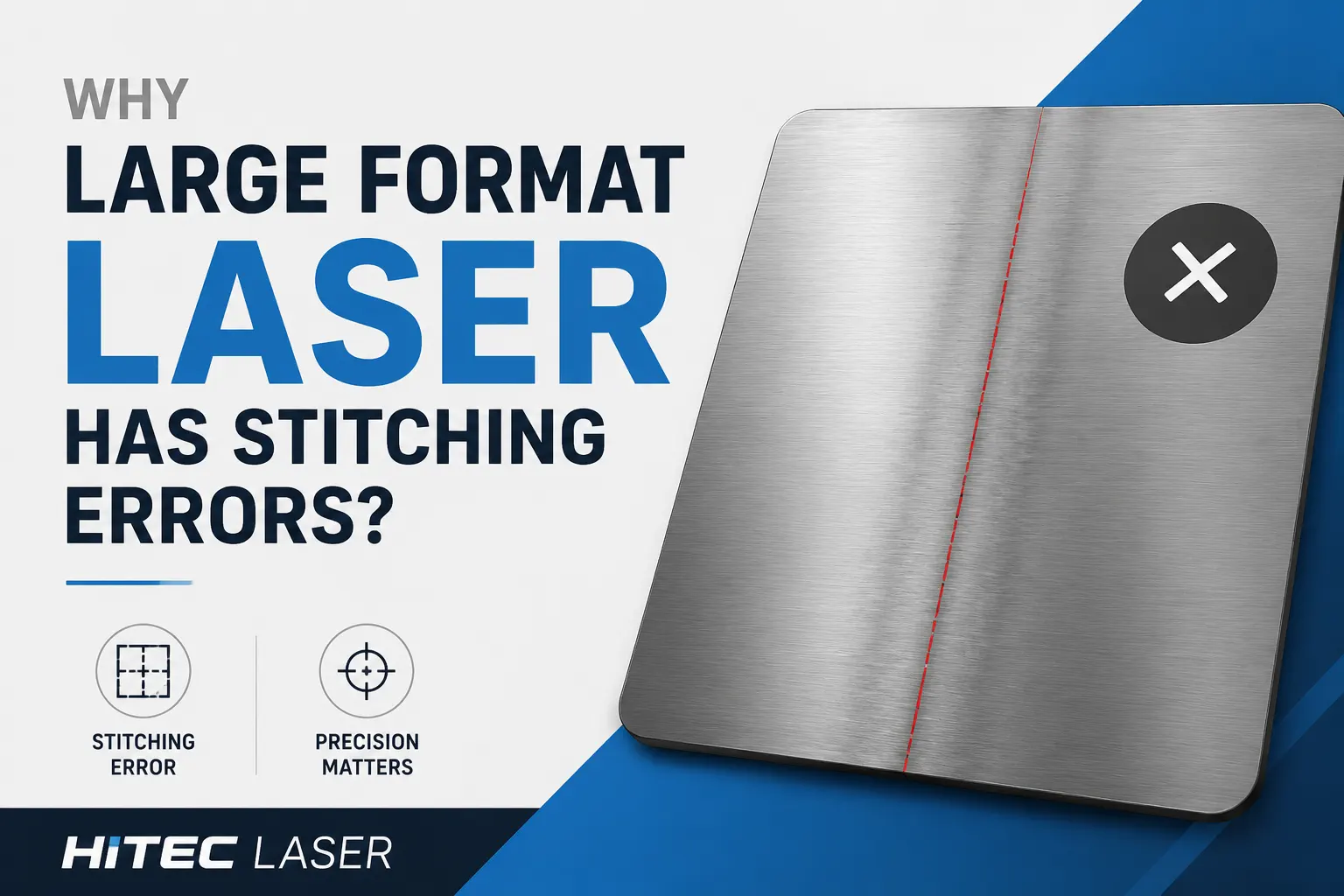
4. Large Elevator Panels Are Difficult for Conventional Galvo Markers
This is one of the most important issues when selecting a laser marking machine.
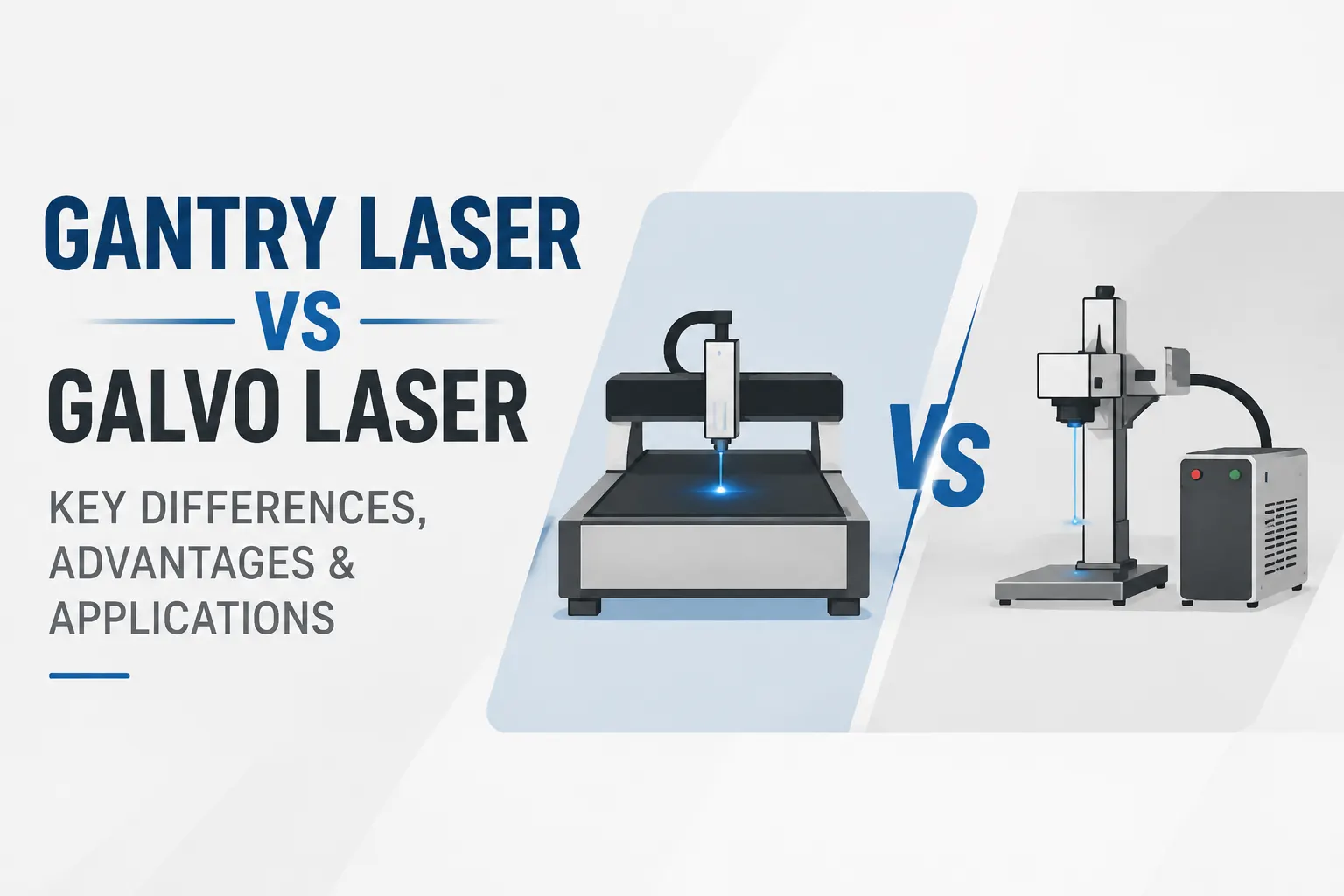
A conventional fiber laser marker usually has a relatively limited marking field.
That is excellent for:
- Nameplates
- Small components
- Jewelry
- Tools
- Small industrial parts
But an elevator manufacturer may need to process a panel that is much larger.
For example:
600 × 600 mm
900 × 1300 mm
1200 × 1200 mm
or even:
1300 × 2500 mm
Trying to process a large panel with a small marking field may require repeated repositioning and stitching.
That can increase setup time and create alignment problems.
This is where a large-format laser marking machine becomes valuable.
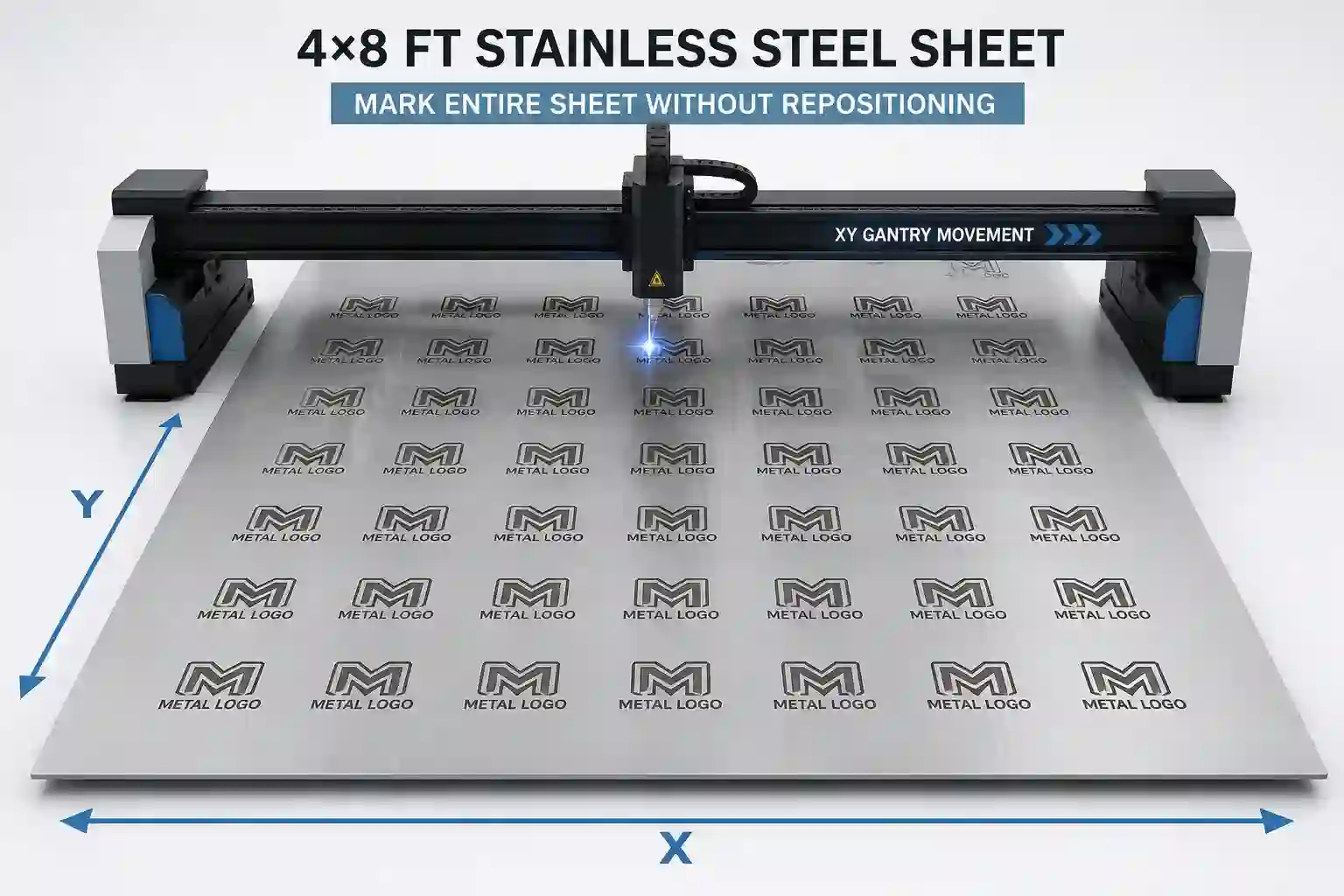
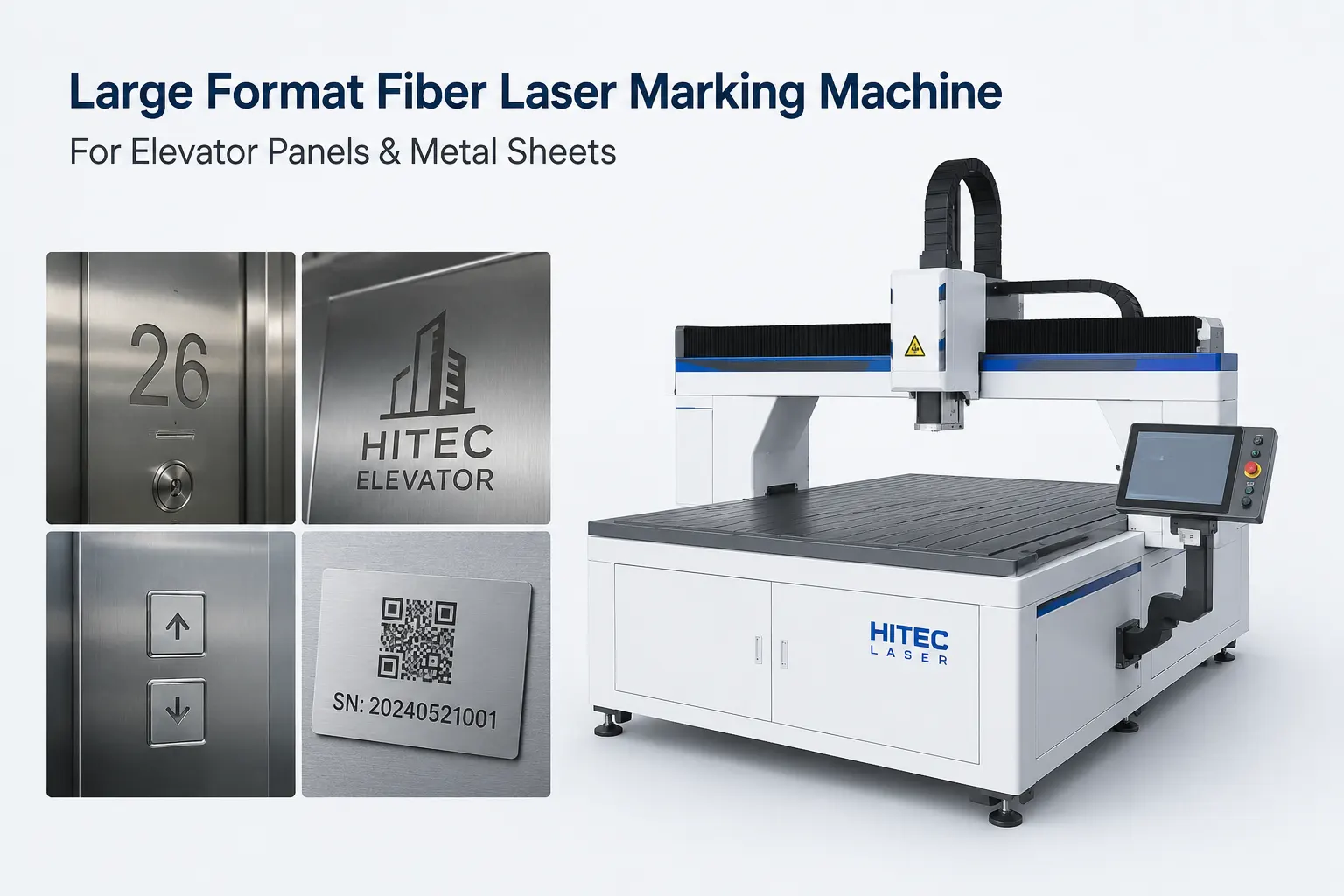
A large-format system uses XY gantry movement to move the laser marking system across a much larger working area.
Instead of repeatedly moving the elevator panel under a small marking field, the machine can process large graphics across the panel with controlled mechanical positioning.
What Can a Large-Format Laser Mark on an Elevator Panel?
A large-format fiber laser marking machine can be configured for a wide range of elevator applications.
Elevator Door Logos
Create permanent manufacturer or customer logos directly on stainless-steel doors.
Large Decorative Patterns
Mark geometric patterns, lines, textures, or customized decorative graphics across large metal panels.
Safety Symbols
Process high-contrast symbols and instructions directly onto metal surfaces where appropriate.
Large Identification Graphics
Mark large equipment numbers, project identification, or customized graphics.
QR Codes and Serial Numbers
Generate variable data for product identification and traceability.
Control Panels
Mark floor numbers, directional symbols, button identification, and other control-panel graphics.
Stainless-Steel Nameplates
Mark technical information, model numbers, serial numbers, logos, and other identification data.
Fiber Laser Marking for Different Elevator Materials
The laser configuration should be selected according to the actual material and surface finish.
Elevator Material | Typical Laser Application |
Stainless steel | Black marking, engraving, surface marking |
Brushed stainless steel | High-contrast logos and graphics |
Mirror stainless steel | Surface marking and specialized decorative processing |
Anodized aluminum | Coating removal / high-contrast marking |
Painted metal | Selective paint removal |
Aluminum | Surface marking and engraving |
Brass | Marking and engraving |
Coated metal | Coating removal |
Other alloys | Process determined by material testing |
The same laser parameters should not be applied to every material.
Laser power, pulse duration, frequency, speed, focus, hatch spacing, and other parameters must be optimized according to the material and desired appearance.
MOPA Fiber Laser for High-Quality Elevator Marking
For elevator manufacturers who require more control over the marking appearance, a MOPA fiber laser can provide additional process flexibility.
Compared with a standard fiber laser, MOPA technology allows more control over pulse characteristics.
This can be useful when working with:
- Stainless steel
- Aluminum
- Anodized aluminum
- Colored metal
- Fine graphics
- High-contrast markings
- Decorative patterns
For premium elevator panels, the goal is not simply to produce the darkest possible mark.
The real objective is:
High contrast + clean edges + controlled heat input + consistent appearance.
Large Format vs. Conventional Fiber Laser Marking
Feature | Conventional Fiber Marker | Large-Format Fiber Laser Marker |
Small nameplates | Excellent | Excellent |
Small components | Excellent | Good |
Large elevator panels | Limited | Excellent |
Large logos | Limited | Excellent |
Large decorative graphics | Limited | Excellent |
Large metal sheets | Limited | Excellent |
XY gantry movement | Usually not required | Yes |
Large working area | Limited | Available |
Large continuous graphics | More difficult | Better suited |
The important point is that a large-format machine is not simply a conventional marker with a larger lens.
For large elevator panels, the mechanical motion system, laser control, positioning accuracy, software, and marking strategy all need to work together.
HITEC Laser Large-Format Laser Marking Machine
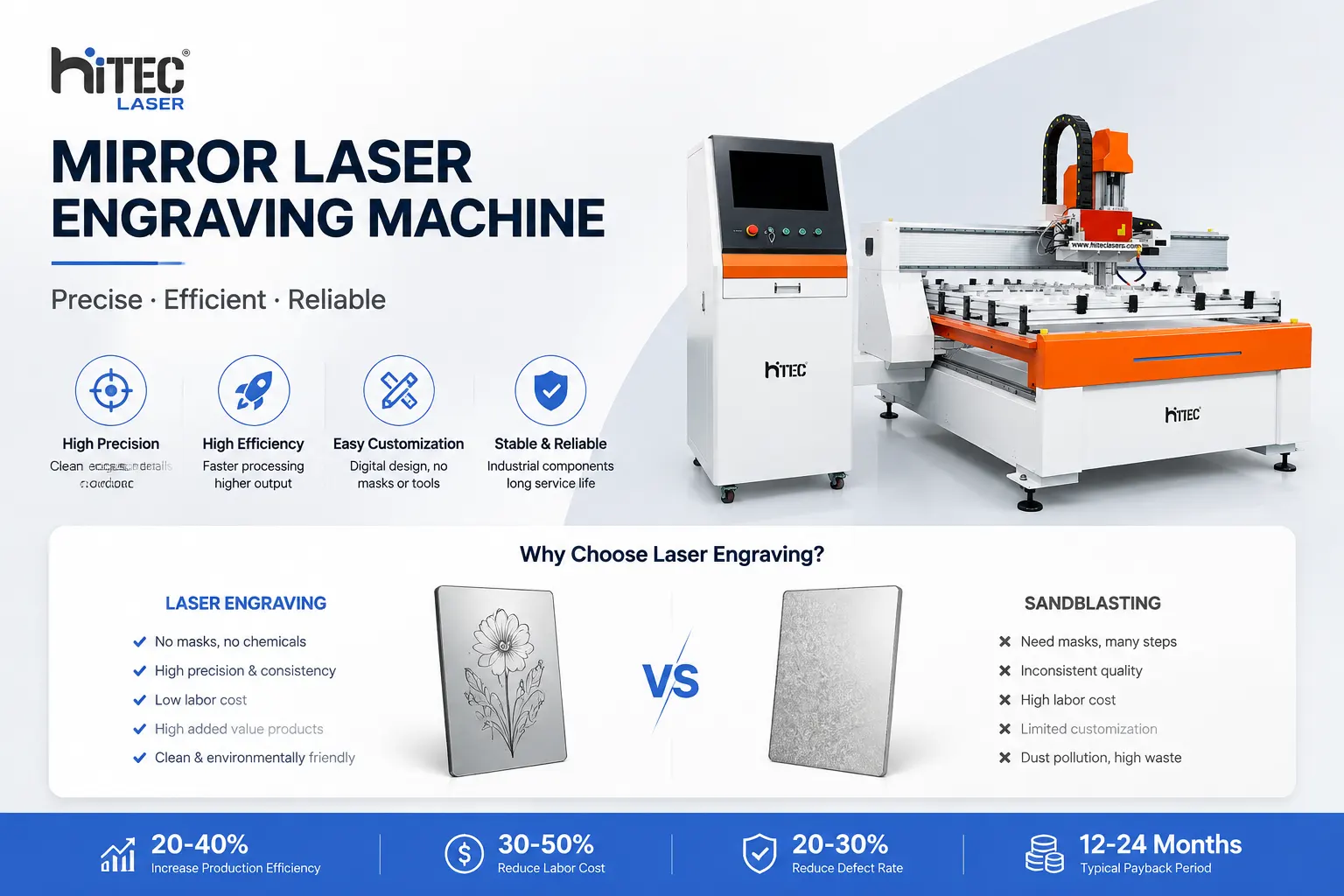
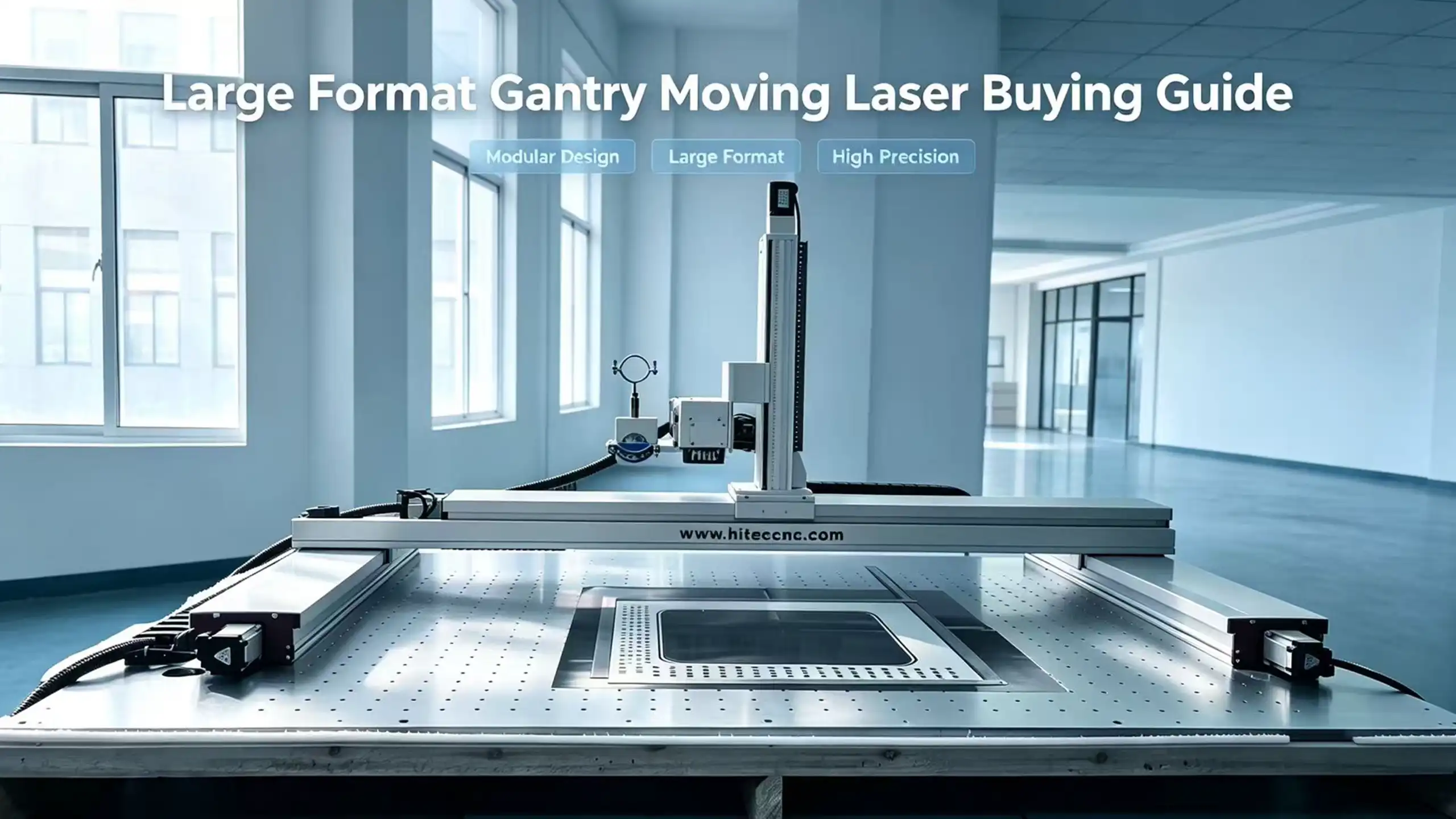
HITEC Laser develops industrial laser marking systems for manufacturers who need to process larger workpieces than conventional galvo marking machines can comfortably handle.
Our large-format laser marking systems are available with working areas including:
- 600 × 600 mm
- 600 × 900 mm
- 1300 × 900 mm
- 1200 × 1200 mm
- 1300 × 2500 mm
For customers in the US, the largest configuration is approximately:
51 × 98 in. / 4.3 × 8.2 ft.
This makes the system suitable for applications ranging from individual elevator nameplates to large stainless-steel elevator panels.
Why Use XY Gantry Motion?
A large elevator panel requires more than a large optical field.
HITEC Laser large-format systems use XY gantry movement to position the laser over the workpiece.
This provides several advantages:
Large Working Area
The machine can process substantially larger panels than a conventional fixed galvo field.
Flexible Graphic Positioning
Large logos and graphics can be positioned across the panel according to the production drawing.
Reduced Manual Repositioning
The operator does not need to repeatedly move a large and potentially fragile elevator panel.
Suitable for Large Metal Sheets
The system can be configured for large stainless-steel and aluminum workpieces.
Production Flexibility
Different customer graphics can be loaded digitally without producing new physical masks or templates.
One Machine, Multiple Elevator Applications
A properly configured laser system can support multiple stages of elevator production.
Before Assembly
Mark:
- Component identification
- Serial numbers
- Technical information
- Internal traceability codes
- During Panel Production
Mark:
- Logos
- Decorative graphics
- Floor numbers
- Safety symbols
- Control-panel graphics
- Before Final Installation
Process:
- Customer-specific identification
- Building/project information
- QR codes
- Customized graphics
This gives manufacturers a single digital marking platform that can support both standardized production and customized elevator projects.
Laser Marking for Elevator Logos
Elevator logos are one of the most visible applications.
A manufacturer’s logo may be placed on:
- Elevator doors
- Control panels
- Cabin walls
- Stainless-steel nameplates
- Decorative panels
Laser marking allows the logo to be reproduced directly from a digital design file.
Fine lines, small text, geometric shapes, and detailed logos can be processed with high repeatability.
For large logos, the XY gantry system allows the marking area to extend well beyond the typical field of a standard galvo marker.
Laser Marking for Elevator Safety and Identification
Laser marking can also be used for permanent safety and identification information where the material, marking method, and applicable regulations allow.
Examples include:
- Warning symbols
- Safety instructions
- Equipment identification
- Manufacturer information
- Serial numbers
- QR codes
- Maintenance-related identification
However, the laser itself does not determine regulatory compliance.
The content, dimensions, location, symbols, contrast, material, and installation method must always be verified against the applicable elevator regulations and standards in the target market.
How to Choose an Elevator Laser Marking Machine
Before purchasing a machine, elevator manufacturers should consider five questions.
- What is the largest panel size?
This determines the required working area.
- What material and surface finish are being processed?
Brushed stainless steel, mirror stainless steel, anodized aluminum, painted metal, and other materials require different laser processes.
- Do you need marking or engraving?
A surface color change, coating removal, and deep engraving require different process parameters and potentially different laser configurations.
- How much customization is required?
If every elevator project uses different logos, graphics, serial numbers, or QR codes, digital laser marking can provide a major production advantage.
- How large are the graphics?
If the customer needs large continuous graphics across an elevator panel, a large-format XY gantry system should be considered instead of a conventional small-field marker.
Why Elevator Manufacturers Are Moving Toward Laser Marking
The value of laser marking is not simply that it replaces a sticker.
It can help manufacturers achieve:
Permanent identification
Cleaner product appearance
Higher graphic flexibility
Digital production
Reduced dependence on physical masks
Better traceability
Large-format marking capability
For manufacturers producing customized elevator doors and stainless-steel panels, this combination can make laser marking an important part of a modern production workflow.
Conclusion
Elevator marking has evolved from simple labels and printed signs into a combination of product identification, safety communication, customization, traceability, and industrial design.
For small components and nameplates, a conventional fiber laser marking machine may be sufficient.
For large elevator doors, stainless-steel panels, decorative graphics, and oversized logos, however, a large-format fiber laser marking machine with XY gantry motion provides a much more suitable production solution.
The right machine should be selected based on the largest workpiece, material, surface finish, marking type, graphic size, production volume, and required appearance.
For elevator manufacturers, the best way to select a laser is not to choose a power rating from a specification sheet.
Test the actual elevator material, surface finish, logo, graphic, and required marking result first.
HITEC Laser can provide application testing and large-format laser marking solutions for elevator panels, stainless steel doors, logos, identification plates, and other industrial marking applications.